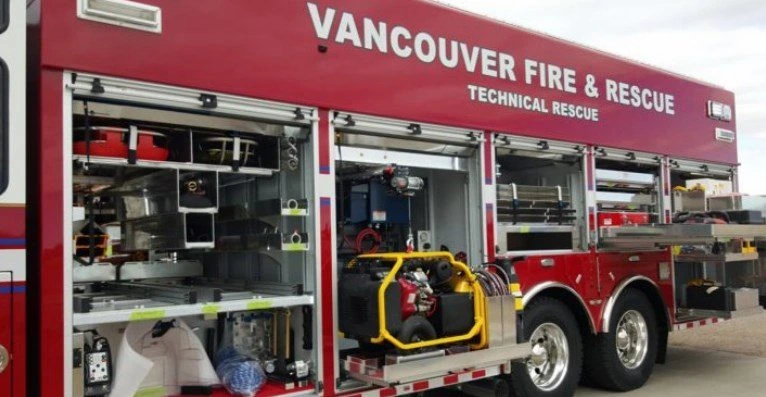
The Vancouver Fire and Rescue Services (VFRS) holds the distinction of being the busiest fire department in Canada, with each operational staff member responding to approximately 90 incidents per year nearly 2 to 2.5 times more than firefighters in other major Canadian cities. In 2017 alone, VFRS responded to 66,837 emergency calls, the majority of which were medical in nature. As Vancouver continues to grow and densify, demand for emergency services continues to rise at a significant pace.
Compared to other municipalities across the country, Vancouver firefighters experience some of the highest call volumes per capita. This heavy workload highlights the critical role of preventive fire protection in reducing unnecessary emergency responses.
These responses included fires, medical calls, hazardous materials incidents, and technical rescues. With medical calls representing a large portion of total emergencies, the city’s fire department remains constantly engaged.
The sharp rise in emergency calls is driven by:
Rapid population growth
Significant increases in high-rise construction
Urban densification across the Lower Mainland
Vancouver's skyline continues to expand, introducing both modern conveniences and increased fire risks.
Captain Jonathan Gormick of Vancouver Fire and Rescue has emphasized a concerning trend: new construction materials burn faster and hotter than those used in past decades. Historically, residents had approximately 10 minutes to escape a residential fire. Today, due to synthetic furnishings and lightweight construction, escape time has dropped to as little as 3 minutes.
Modern construction often features:
Open floor plans
Lightweight engineered wood
High-rise living
Greater fuel load in residential suites
These factors increase the speed at which fires grow and limit available evacuation time.
Vancouver’s mixture of aging buildings, high-rise towers, and dense urban neighborhoods means the margin for error is extremely small. Fire protection systems play a crucial role in reducing the severity and frequency of emergency responses.
Properly maintained fire protection systems:
Reduce the number of false alarms
Help detect fires early
Slow or stop fire spread
Support firefighter response
For building owners, ensuring systems function correctly is not just responsible—it's legally required.
In accordance with NFPA, B.C. Fire Code, and local municipal bylaws, the following fire protection systems must be inspected at least once per year:
Commercial kitchens particularly those in restaurants, cafeterias, and industrial settings require twice-yearly inspections to ensure grease, heat, and operational hazards don’t compromise safety.
Inspections and proper maintenance:
Reduce system failures
Mitigate fire-related loss
Prevent property damage
Improve occupant safety
Decrease strain on Vancouver Fire and Rescue
Preventive care ultimately supports the entire community by lowering unnecessary emergency responses.
Certified fire protection companies play a crucial role in supporting Vancouver’s busiest fire department by:
Identifying hazards before they escalate
Ensuring systems comply with all fire codes
Verifying equipment performs properly in emergencies
Reducing false alarms and preventable incidents
By investing in reliable fire protection systems and routine inspections, property owners help safeguard both occupants and the larger community.
As one of the busiest fire departments in the country, Vancouver faces increasing demands driven by urban growth and modern construction risks. The best way to reduce these pressures and prevent fire-related tragedies is through strong preventive fire protection, including regular inspection, testing, and maintenance of all fire and life safety systems.
For professional fire protection services throughout the Lower Mainland, contact Otis Fire Protection to help keep your property code-compliant, safe, and ready for any emergency.
Copyright © 2026 | Otis Fire. All Rights Reserved.